



Lahore (Big Digit) BYD-MMC Leads Climate Action Dialogue, Urges Shift to Clean Mobility To Combat Hazardous Smog

Lahore, 18th December (Big Digit), Pakistan continues to grapple with hazardous air pollution, ranking as the world’s third-most polluted country according to IQAir data, with average PM2.5 concentrations of 73.7 μg/m³, far exceeding World Health Organization (WHO) guidelines. In urban centers such as Lahore, winter smog regularly pushes PM2.5 levels beyond 145 μg/m³, a reality that guided much of the discussion at the Climate Action Dialogue hosted by BYD Pakistan – Mega Motor Company (MMC) in Lahore this week.
 Research by the Pakistan Institute of Development Economics (PIDE, 2024) identifies the transport sector as a major contributor to Pakistan’s emissions challenge, accounting for over 43% of national emissions and up to 80% in dense urban centres like Lahore. Against this backdrop, speakers at the dialogue emphasized that cleaner, more sustainable transportation represents one of the most immediate and controllable intervention points to reduce emissions and significantly improve air quality, particularly in highly populated cities.
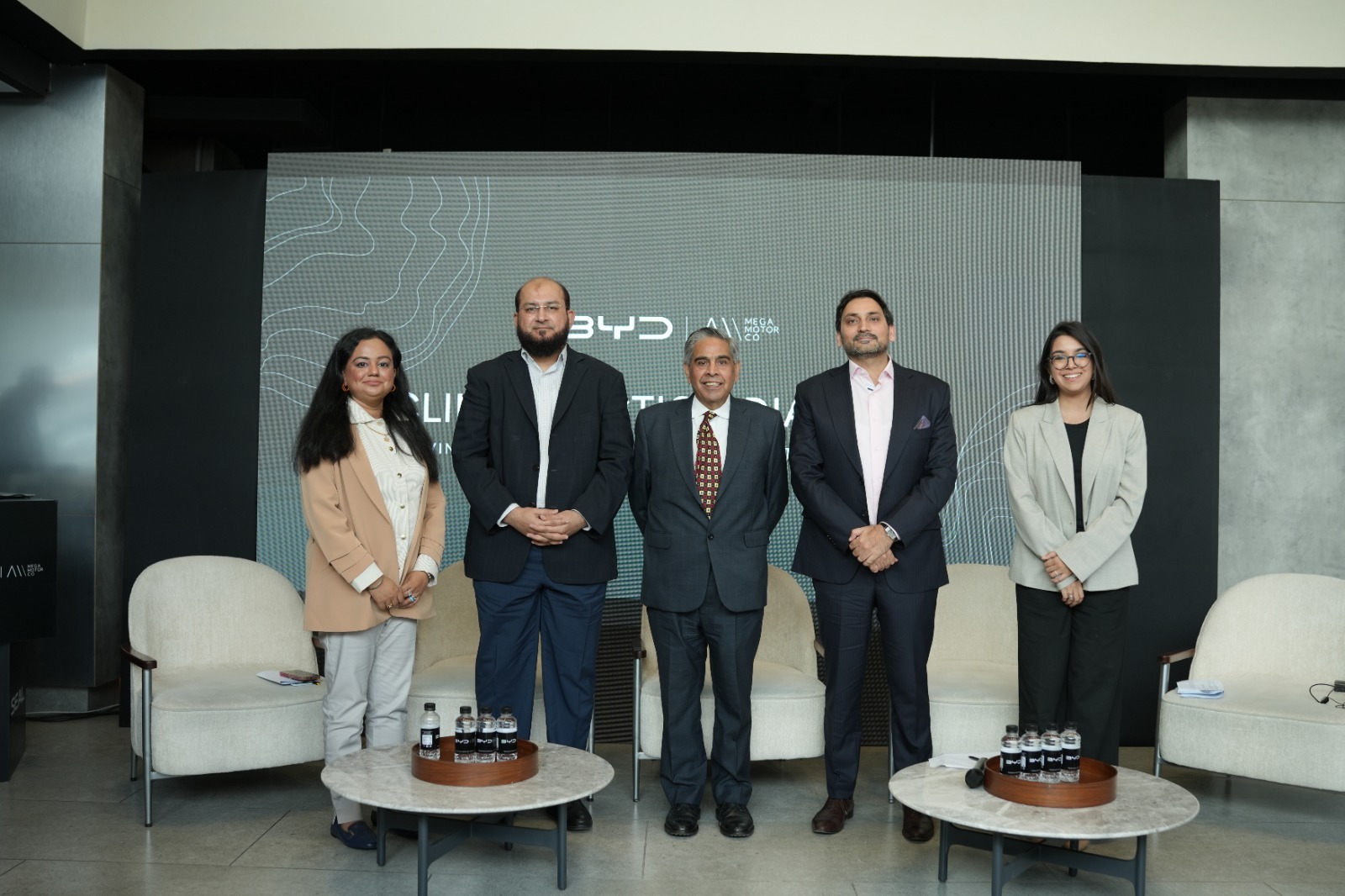
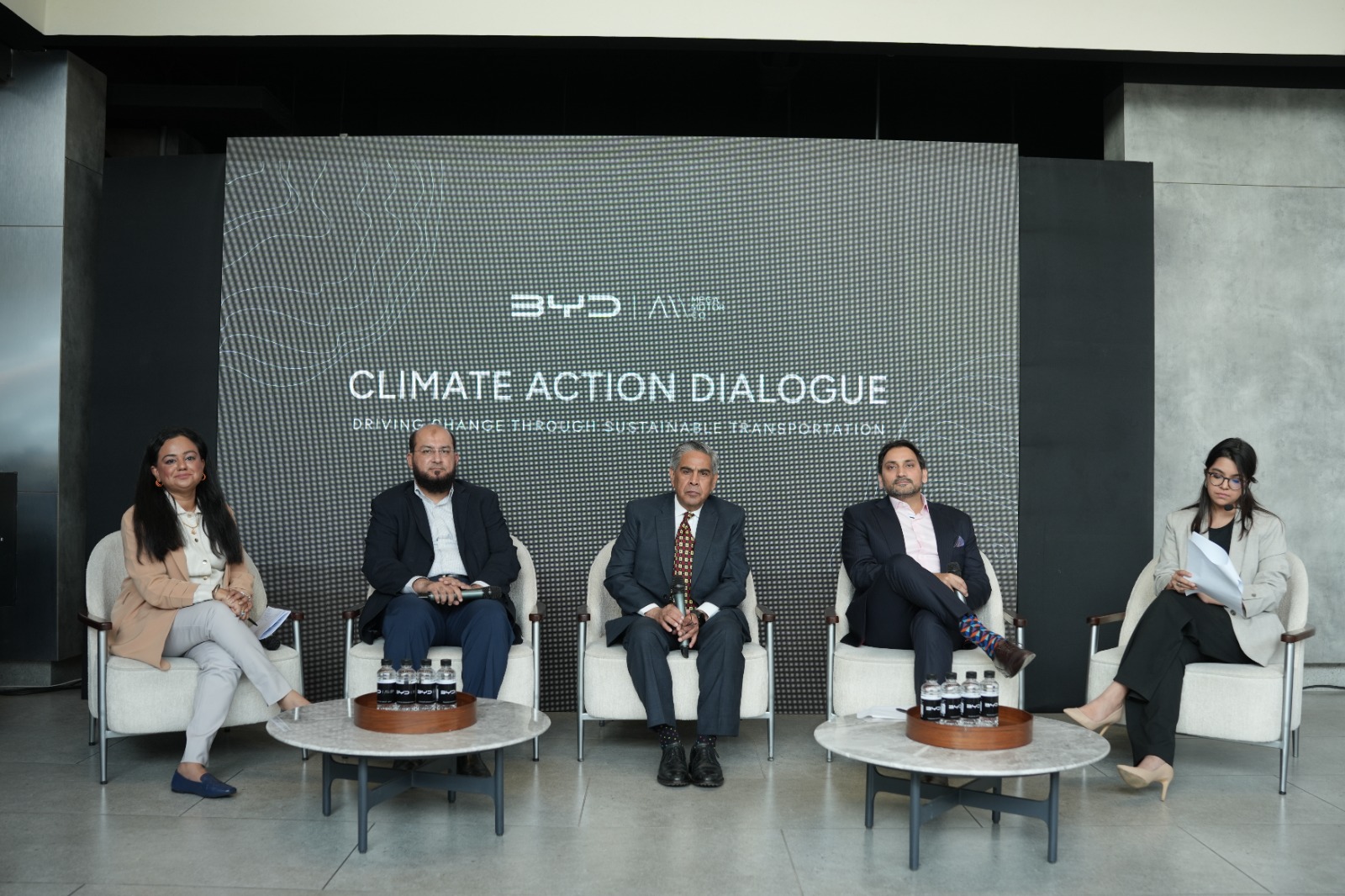
As Pakistan continues to battle worsening smog each year, driven by multiple structural factors, BYD-MMC brought together energy researcher Dr. Naveed Arshad, climate expert Ali Tauqeer Shaikh, and climate finance expert Mehak Masood to examine how clean mobility solutions can be deployed at scale.
Opening the discussion, Danish Khaliq, VP Sales & Strategy at BYD – MMC, said that NEVs significantly reduce tailpipe emissions, which are a major contributor to smog in urban cities. He particularly highlighted the impact developing the NEV industry can have on the Country’s GDP, “At just 30% adoption, clean mobility could add nearly PKR 1.3 trillion to Pakistan’s economy and support up to 1.5 million direct and indirect jobs, according to independent research, before even accounting for the significant health and air-quality benefits.”
Khaliq pointed out that global leaders like BYD can play a pivotal role in bridging ecosystem gaps by bringing technical expertise, supporting charging infrastructure, and sharing learnings from international markets while simultaneously building local capabilities that make clean mobility scalable and sustainable in Pakistan. He added that when market leaders work in close partnership with government, adoption can be significantly accelerated.
 The conversation underscored the need to strengthen implementation of the National Electric Vehicle
(NEV) Policy to move towards sustainable transportation, introduce meaningful incentives for cleaner vehicles, and address regulatory gaps that continue to slow progress.
Throughout the dialogue, participants acknowledged the role of private-sector actors in supporting the transition. BYD-MMC’s involvement plays a very significant role as the company continues to align its local efforts with BYD’s global vision of contributing to a one-degree reduction in the earth’s temperature. The Company’s focus on NEV education, infrastructure, and introducing advanced electric and plug-in- hybrid vehicles reflect a broader commitment to supporting Pakistan’s shift toward cleaner mobility.
The purpose of these discussions was to lay the groundwork for a climate action plan that places the accelerated adoption of clean mobility solutions at the heart of national progress, while ensuring supportive policies are in place. How can Pakistan align policy, industry, and public action to make sustainable transport a reality for its cities? The country’s progress will depend on coordinated policy measures and active collaboration among industry players, transforming dialogue into tangible, well-orchestrated steps toward a cleaner, more sustainable future.


