

ISLAMABAD (Big Digit) Privatization of PIA and Economic Reforms of Prime Minister Shahbaz Sharif

ISLAMABAD (Big Digit) The primary objective of privatization is to reduce the state’s permanent deficit, and it cannot be delayed much longer. The privatization of many government institutions has become inevitable because they are a permanent burden on the national exchequer. Due to the loss of several hundred billion dollars in these institutions, the budget deficit is increasing. In this sense, privatization is the right course of action. Under Prime Minister Shahbaz Sharif’s economic reforms, Pakistan’s national airline, PIA, which ruled the skies of the world for decades, has been privatized. Pakistan International Airlines (PIA) has been privatized. Arif Habib Group bought the loss-making national company for Rs 135 billion. Earlier, at the end of the first phase of the auction, two potential buyers, Arif Habib and Lucky Cement, placed bids above the fixed base price of Rs 100 billion. The second phase of the auction began with a base price of Rs 115 billion. Before the break of the second phase, Lucky Cement revised its bid to Rs 120.25 billion, while in response, Arif Habib Group increased its bid to Rs 121 billion. After these bids, the two consortia decided to take a 30-minute break. After the break, Lucky Consortium offered Rs 134 billion, while its In response, the Arif Habib Consortium placed a bid of Rs 135 billion and thus became the owner of PIA. It should be noted that 75 percent of PIA’s shares have been auctioned. PIA will get 92.5 percent of the proceeds from the sale of 75 percent shares, while only 7.5 percent will go to the national treasury. 25 percent of PIA’s shares will remain with the government; however, the successful bidder will have the option to buy the remaining 25 percent shares after payment or let them remain with the government. Under the agreement, no employee will be fired for one year. Pensions and benefits of employees will remain fully protected, while pensions, medical facilities, and concessionary tickets of retired employees will be taken care of by the holding company. Sealed bids submitted earlier were received from pre-qualified bidders, Lucky Cement, private airline Air Blue, and investment company Arif Habib.
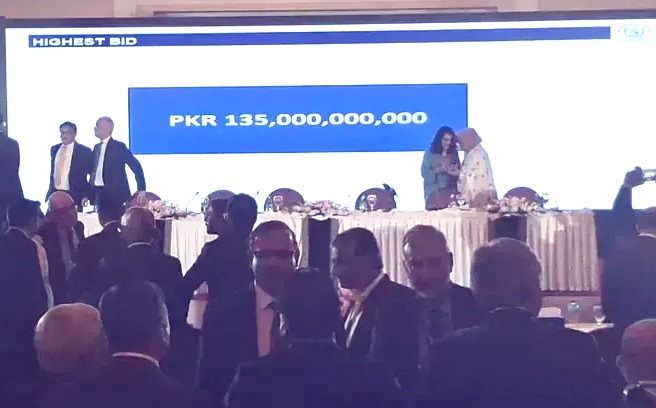 Representatives of the bidding groups came to the ceremony and submitted their sealed offers in a transparent box, during which there was a brief confusion in placing the envelopes. The event was broadcast live on state TV. After the bids are received, the Privatization Commission Board and the Cabinet Committee on Privatization will now approve the reference price for the PIACL bid. The entire process was broadcast live and streamed on all private TV channels as well as the government’s respective social media handles. This auction is the second attempt to sell the once-promising national airline, as the previous auction failed when the only offer was much lower than the government’s reference price, resulting in the first major privatization in almost two decades being stalled. Meanwhile, Prime Minister Shehbaz Sharif, while addressing the federal cabinet meeting, thanked government officials and the Privatization Commission for their role in the privatization of the national airline. He stressed that the process has been made transparent and said that this will be the biggest transaction in the history of Pakistan. Only God knows how far the bidding will go, but the process will have to come back to the cabinet. The losing bidders will have no right to join the winning bidder, and only those groups that were not part of the auction will be able to join the new management. This means that only one of the three consortia currently in the race will become part of the management of the national airline after acquiring a majority stake, while the Fauji Fertilizer Company will retain the option to join them later. Before the bid, there were reports that a deal was being considered behind the scenes between at least two parties, namely the Arif Habib and Lucky Cement groups, which later fell through. Founded in 1955, PIA was considered the modern airline of South Asia during the 1960s and 1970s. The move is part of the reform plan agreed under the $7 billion International Monetary Fund (IMF) program. The bid was held for 75 percent of the shares in the privatization process of PIA, led by the Privatization Commission, the government of Pakistan.
PIA has been privatized under Prime Minister Shahbaz Sharif’s economic reform agenda. The privatization process has been made transparent, credible, and authentic in accordance with government rules and regulations. The privatization process will see the privatization of 75% of PIA’s shares, while 25% will remain with the government. The three consortium buyers will make an immediate investment of Rs 80 billion. The number of aircraft will have to be increased from 19 to 40. A sales tax exemption is available on the purchase. Approval has been received from the IMF. The purchasing party will be bound to fully implement the new business plan. The privatization process was broadcast live on all TV channels, the relevant social media handles of the Government of Pakistan and the Privatization Division in accordance with the Prime Minister’s vision of transparency. According to the new business plan, the employees will be kept on the job for one year, and after one year, the number of employees will be reduced. The buying party will have to make an immediate investment of up to Rs 80 billion, and the number of aircraft will be increased from 19 to 40, and sales tax exemption will be available on the purchase of aircraft. A business plan has been agreed with the pre-qualified companies, and the demands of the pre-qualified companies for the privatization of PIA have been met.
Sales tax exemption on the purchase of aircraft has also been approved by the IMF. PIA currently has a debt of about Rs 150 billion.
According to the business plan, the buying party will have to increase the number of flats from 19 to 40, and it will be necessary to fully implement the new business plan.
The standing committees of the Senate and the National Assembly had recommended that PIA employees be kept on the job for five years. Of the proceeds from the sale of 75 percent of the national airline’s shares, 92.5 percent will be invested in PIA, and 7.5 percent will be deposited in the national treasury. 25 percent of PIA’s shares will remain with the government, with the successful bidder having the option to buy the remaining 25 percent shares after payment.
Three consortia have participated in the bidding process for the purchase of PIA. Consortium One includes Lucky Cement, Hub Power, Kohat Cement, and Metro Ventures. Consortium Two includes Arif Habib, Fatima Fertilizers, City Schools, and Lake City Holdings. Consortium Three includes Air Blue Private Limited. The fourth consortium, Fauji Fertilizers, had withdrawn from the auction process. Arif Habib Consortium placed the highest bid for bid for the privatization of the national airline PIA. In the second phase of PIA privatization in Islamabad, Arif Habib Group bid more than Lucky Consortium and Air Blue. Advisor to the Privatization Commission Muhammad Ali attended the ceremony as the chief guest and said that the privatization of PIA will bring investment to the country. The government wants PIA to be as good as it was in the past. The government decided to privatize 51 to 100 percent of the national airline’s shares; some bidders wanted to buy 75 percent of the shares. The Privatization Commission Advisor said that the remaining 25 percent of the national airline’s shares can be dealt with in 90 days. He said that two-thirds of the payment can be made initially and one-third later. We have also allowed the bidders to include two parties after the bidding. The Privatization Advisor also said that 92.5 percent of the money received from the bidding will be spent on the improvement of the national airline.
At the ceremony, Lucky Consortium bid more than 101 billion 50 million rupees for PIA, while Air Blue bid 26 billion 50 million rupees.
Arif Habib Consortium bid Rs 115 billion at the PIA privatization ceremony. Arif Habib Group Chairman Arif Habib has said that he will work hard to make PIA great again. After buying PIA for a bid of Rs 135 billion, Arif Habib said that Pakistan has won today, privatization will promote investment in the country, and investors from abroad will invest in Pakistan. We will work hard to make PIA great again. The government of Pakistan successfully conducted the bid. He says that the Privatization Commission and the cabinet also deserve credit for this entire process, which will open more avenues for privatization.
Making PIA great will also benefit the Pakistani economy.
On October 31 last year, a bid of Rs 10 billion was received for the privatization of PIA, while the government had allocated PIA’s reserve price of Rs 80 billion for the previous privatization. After receiving the bids, the privatization process will be completed as per the agreed-upon regulations.
It should be noted that the decline of the world’s best airline, PIA, in the past began in the 1980s. With the completion of privatization, new hope has arisen for the revival of PIA. Pakistan was established two months after the operational start of Orient Airways in 1947, and it was decided to create a national airline. Orient Airways was merged with PIA on January 10, 1955. PIA’s first international service started in 1955, and this airline, which started with a small fleet, became one of the leading airlines in the world. In 1960, PIA became the first airline in Asia to include the Boeing 707. In a short period of time, PIA’s operations expanded to four continents of the world, including Europe. PIA also played a role in bringing Emirates, one of the world’s best airlines, back on its feet. The national airline currently has 33 aircraft. On the other hand, the company has seven thousand employees, including 320 pilots. PIA has 170 flight routes to 20 countries every week. The privatization of the national airline, Pakistan International Airlines (PIA), will be Pakistan’s first major privatization in almost two decades. It is being considered the most significant deal ever by any government agency. In the next phase, the federal cabinet will approve the transaction in a few days, after which the documents received from the bidders will be signed. After the signing, the privatization commission will have 90 days in which to complete other matters, including the transfer of properties, liabilities, and leased aircraft.PIA has routes to Dubai, Saudi Arabia, London, Canada, Beijing, Muscat, Doha, Sharjah, and Abu Dhabi, while routes to Kuala Lumpur, Istanbul, Kuwait, and Bahrain are also available. Out of the more than Rs 800 billion debt owed by PIA, the government has stockpiled about Rs 660 billion in the holding company so that payments can be made from the proceeds of privatization and the sale of the Roosevelt Hotel.
The announcement said that the reference price for PIA’s bid will be approved by the Privatization Commission Board and the Cabinet Committee on Privatization. The privatization process will be completed as per the agreed regulations.
It should be noted that a meeting of the private sector working group formed under the chairmanship of Prime Minister Shehbaz Sharif regarding the energy sector for economic development was held. The Prime Minister praised the hard work and efforts of the energy committee formed in consultation with the private sector. The meeting was attended by Federal Minister for Climate Change Mosaddiq Malik, Federal Minister for Economic Affairs Ahad Khan Cheema, Federal Minister for Finance and Revenue Muhammad Aurangzeb, Federal Minister for Information and Broadcasting Attaullah Tarar, Minister for Power Division Sardar Owais Ahmed Khan Leghari, Minister for Petroleum Ali Pervez Malik, Minister of State for Finance and Railways Bilal Azhar Kayani, Special Assistant to the Prime Minister Haroon Akhtar and relevant senior government officials. Positive results of the economic reforms of Prime Minister Shehbaz Sharif and his team are emerging. Pakistan’s foreign exchange reserves have reached $21.1 billion for the first time, while the debt ratio has reduced to 26 percent. This increase is the result of reforms rather than external debt, which is stabilizing the economy and opening the way for development. According to an official statement, a meeting of the Privatization Committee of the Cabinet was held in Islamabad under the chairmanship of Deputy Prime Minister Ishaq Dar. On this occasion, the meeting was briefed on the privatization process by the Privatization Commissioner and the Ministry of Privatization. The committee conducted a comprehensive review of the privatization process under the Privatization Commission. The policies and rules, and regulations were strictly implemented by the committee. It was directed that global standards should be implemented to make the privatization process transparent. Deputy Prime Minister Ishaq Dar said that equal opportunities should be provided to all participants in the privatization process. According to the statement, the Privatization Cabinet Committee approved the National Cannabis Control and Regulatory Policy 2025. The policy aims to promote the use of botanical plants in the pharmaceutical and textile sectors in the country. The Privatization Committee approved the Visa Clearance System on the recommendation of the Ministry of Interior. The system aims to facilitate the acquisition of visas for Pakistanis going abroad under a transparent and secure system. The committee also ratified the decisions taken in the meetings of the Cabinet Committee on Legislative Cases and the decisions taken in the December 18 meeting of the Economic Coordination Committee. The Prime Minister termed the privatization of the national airline as important and said that it is the biggest transaction in the history of Pakistan; full care was taken to ensure transparency in it. The government is taking all possible steps to ensure a transparent privatization process of the national airline. The Prime Minister said that today is the day of privatization of the national airline, and privatization will be done for the first time in the history of Pakistan. The concerned authorities and cabinet members have worked tirelessly for the privatization of the national airline. The privatization process will also be broadcast on all TV channels, the relevant social media handles of the Government of Pakistan and the Privatization Division, in accordance with the Prime Minister’s vision of transparency. The privatization of the national carrier is being done to ensure the ‘glorious return of the legend’. The government says that it cannot subsidize loss-making institutions. The move comes after Pakistan secured a $3 billion loan from the International Monetary Fund (IMF) in June to help it overcome its fiscal deficit. The airline currently employs about 11,000 people. The airline, which was started by private investors as Orient Air in the 1950s, was taken over by the government in the 1950s and renamed Pakistan International Airlines (PIA). Founded in 1955, PIA was considered South Asia’s leading airline in the 1960s and 1970s. However, since 1990, it has not only faced continuous losses but also experienced a sharp decline in its international flights. The privatization of the national airline will be the country’s first major privatization in nearly two decades. The move is part of a reform plan set out under a $7 billion International Monetary Fund (IMF) program.The Pakistani government had attempted to privatize PIA in November last year, but it failed miserably. The Privatization Commission had set a minimum price of Rs85 billion for the national carrier, but the only bidder, Blue World City Consortium, offered a meager Rs10 billion, after which the privatization was postponed. The privatization is being done under Prime Minister Shehbaz Sharif’s economic reform agenda. Meanwhile, Privatization Commission Chairman Muhammad Ali said that under the proposed agreement, no PIA employee could be laid off for a year. The pension and benefits of employees will be fully protected, while the holding company will be responsible for the pension, medical facilities, and concessionary tickets of retired employees. It should be noted that the company has been facing financial problems for several years, and despite the retirement of several employees, there has been no significant recruitment in it since 2017. Currently, only 19 of its 30 aircraft are operational. The state-owned oil company, Pakistan State Oil, has also threatened to cut off oil supplies to the national airline due to non-payment of dues. The airline has also faced legal action in Malaysia over non-payment of dues and threats to seize its aircraft. PIA flights to Europe and the UK have been suspended since 2020 due to a fake pilot license scandal. Owners of private airlines with political connections, who wanted to start their own airlines, were made executives in PIA, which began the decline of PIA, while their private airlines became profitable. Governments have been using state-owned enterprises like PIA and Pakistan Steel Mills for favored bureaucrats, party members, and their own personal interests. The bids for the privatization of PIA are a test of the Pakistani government’s efforts to revive the country’s economy by privatizing state-owned enterprises that have been running into huge losses for years. The biggest accusations made by critics about Pakistan’s national airline were that the airline was not only under immense financial pressure due to its large staff but also faced mismanagement by its top officials. As a result, the airline is severely short of financial resources, and it is becoming increasingly difficult for the Pakistani government to save the airline from a balance of payments crisis, with additional financial burdens for itself. Bids were earlier floated for the privatization of PIA last year, but the process then failed because only one bid was placed for it in 2024, which was equal to just $36 million and was below the government’s target of $305 million. The minimum possible price of $1 million was far below the PIA’s record of continuous losses for years, and it was recently delisted from the Pakistan Stock Exchange.
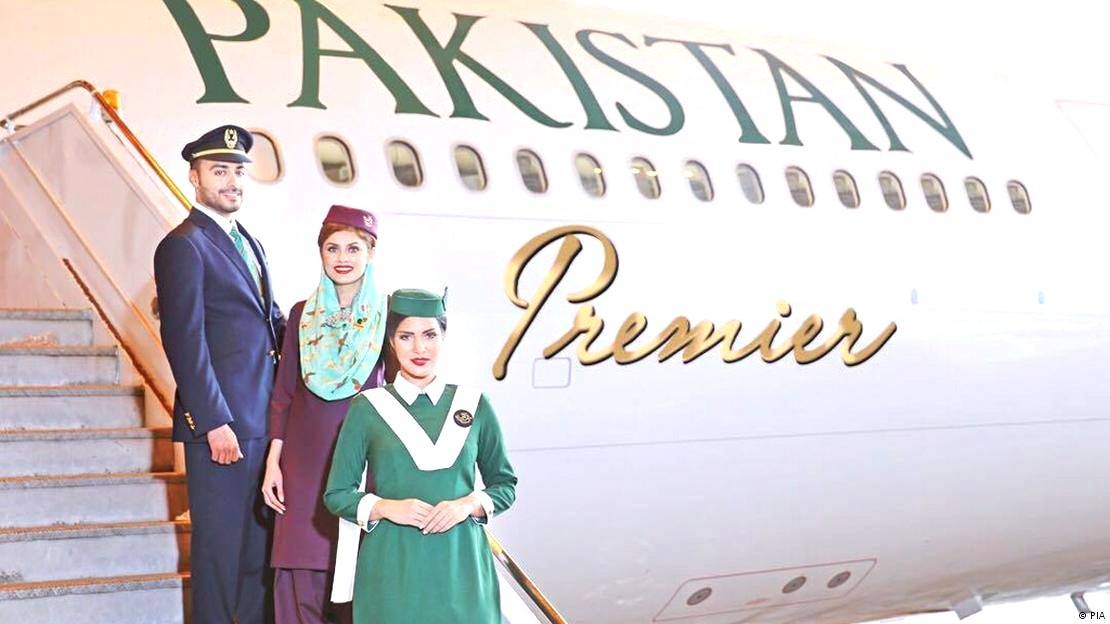
It should be recalled that on July 9, 2025, the Government of Pakistan announced that it had given preliminary approval to four different parties for the purchase of potential shares in Pakistan International Airlines (PIA). The statement issued by the Privatization Commission also said that the Cabinet Committee on Privatization had approved the proposed deal for the Roosevelt Hotel in New York, which includes both the full sale of the hotel or a long-term lease. It should be noted that PIA created the United Arab Emirates’ Emirates and Etihad Airlines, and where they have reached today. In 1951, when Orient Airlines was transferred to the national airline PIA, within a few years, its excellent governance and top professionals brought it among the best in the world. Till 1975, the reputation of the national airline was recognized by the world. After that, it gradually started declining. In a capitalist system, the three M are very important in a corporate organization. Man, Money, and Material. This is explained with an example. In the engineering department, an intern candidate was taken to PIA, and he was given international-level training for eight to ten years. One has to understand the complex nuances of aviation, then one goes and gets the position of Aircraft Engineer, then one has to reach the position of Principal Engineer, and then Chief Engineer.The eyes of the international financial institutions were on this best national asset. In the year 1995, the World Bank gave Pakistan money for the Golden Hand, so the best technical experts, engineers, and pilots who had been prepared for years were expelled under the aforementioned scheme. These were the assets of the national airline. The demand for these experts was all over the world. First, Qatar Airlines took them into its hands, whom PIA had prepared with great effort, and these assets would prepare others as well. Later, airlines around the world took the services of these best people. The head of PIA was usually taken from the Air Force, whether he had marketing and sales experience or not. However, Air Marshal Noor Khan and Air Marshal Asghar Khan prevented PIA from rapidly declining through good governance. However, when the experts were expelled in 1995, nepotism took the place of professionals, and aircraft maintenance and financial management fell into crisis. America wanted to enter this national airline. It brought the Sabre resolution system for this, although the national airline had bought its resolution system from KLM. After some time, it had to be updated, so the American company Sabre got the opportunity to enter PIA, although old professionals were successfully running this system. It was especially related to the records of identity, etc., and it was stored in the Pakistani resolution system. If Pakistani scientists went abroad or left for a special trip, no one else knew about it. Now this work was given to Sabre, which was very dangerous from a defense perspective. This company charged $ 3.50 per unit for creating a PNR for it, while this work could have been done for 57 cents. The headquarters of the resolution system is in Stellanta, and the regional office is in Mumbai. They have our records through Sabre. There were works of great defense importance in the engineering field, which had to be closed. The recruitment of incompetent and incompetent people at the highest levels has worsened financial governance. Civil Aviation has made the national airline even more helpless by distributing routes in the Open Sky Policy. Along with all these shortcomings, political influence, deteriorating law and order situation, and an increase in oil prices have further worsened the condition of the national airline. Usually, the entire blame falls on the lower-level employees; the incompetence and nepotism that occur at the higher level are ignored. Those who say that 120 people are required on a plane while Pakistan has 700 people are wrong. Automation is very high in foreign airlines, and employees there are provided with great facilities and salaries. It should be noted that the background of privatization in Pakistan is that in 1970, Bhutto nationalized 115 industrial enterprises so that the workers of these enterprises could be protected from exploitation and get job security as well as health, education, and housing facilities. However, the result was that 91 out of the 115 nationalized enterprises continued to incur losses. Experts believed that the nationalized enterprises would give profits at an annual rate of return of 15 percent, but unfortunately, the government balance sheet of June 1990 showed that instead of a profit of Rs. 14.3 billion, the government received a mere income of Rs. 0.34 billion and at the same rate, the government suffered a loss of Rs. 27.8 billion on fixed assets. These losses were those of industrial enterprises that were running under the Ministry of Production. Therefore, the Benazir Bhutto, Nawaz Sharif, and Musharraf governments that came to power in Pakistan after 1990 became very clear in this matter that the government’s job was not to do business, but its purpose was to provide incentives to the private sector so that production, income, employment, and tax rates in the country would increase.
In July 1991, the Privatization Commission was established. Through which, 60 out of 100 industrial and business enterprises were sold for a pittance without any reserve price, and by April 1994, 60 enterprises were handed over to the private sector. In August 2000, the Musharraf government expressed its intention to sell 49 government enterprises and get 4 billion dollars, and at the same time, under the privatization policy, it was enacted that 90 percent of the money from the sale of these enterprises would be spent on the retirement of government debts and 10 percent on poverty alleviation. But despite the privatization of 163 government institutions from 1991 to April 2006, neither the government’s debt decreased nor did poverty decrease. In 2006, the national debt of 8 thousand billion rupees increased to 15 thousand billion rupees, and in this privatization process, the government sold Habib Bank, PTCL, MCB, etc. The Musharraf government was selling the Steel Mill for 22 billion rupees, while the market value of its land was more than 100 billion, so the Supreme Court stopped the Shaukat Aziz government from privatizing it. How was corruption done in the privatization process in the past? In the first method, the government sells institutions without giving bids. In the second method, institutions are privatized without fixing a reserve price and without checking the qualifications of the institutions. Privatization means transferring a government agency, property, or service into private hands, that is, transferring it from government ownership to the ownership of private individuals or companies in order to improve performance. The goal is to improve performance, increase competition, and reduce the burden on government agencies. Privatization is a process in which government control is transferred to private ownership and management

