


ISLAMABAD (Big Digit) United Nations; Taliban claim not used for terrorism rejected

ISLAMABAD (Big Digit) A United Nations Security Council report has rejected the Taliban’s claim that Afghan soil is not being used for cross-border terrorism, calling it “unbelievable”, warning that neighboring countries are increasingly seeing Afghanistan as a source of regional instability. The assessment is part of the 16th report of the Analytical Assistance and Sanctions Monitoring Team to the Security Council, which was prepared in the context of growing global concern over the security situation in Afghanistan more than four years after the Taliban returned to power in August 2021. The report said, “The de facto authorities consistently deny that any terrorist group has a presence in or operates from their territory. This claim is not credible. The Taliban had promised under the 2020 Doha Agreement that they would not allow Afghanistan to be used as a threat against other countries. However, since taking power in August 2021, although he has taken strong action against ISIS-K, his approach towards other terrorist groups has been markedly different, as various UN reports have indicated.
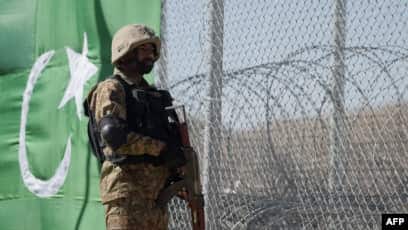 A large number of member states have consistently reported that ISIS-K, Tehreek-e-Taliban Pakistan (TTP), Al-Qaeda, East Turkestan Islamic Movement, also known as Turkestan Islamic Party, Jamaat Ansarullah, Ittehad-ul-Mujahideen Pakistan, and other groups are present in Afghanistan. Some groups have used or are using Afghanistan to plan and prepare for external attacks. According to the Pakistani military spokesman, the Afghan government has become a threat to the entire world, including Pakistan, by harboring non-state actors. Al-Qaeda, ISIS, and other terrorist organizations have centers in Afghanistan, which receive weapons and financial support from there and use them against Pakistan. Pakistan has provided the Afghan Taliban government with such solid evidence of cross-border terrorism that it cannot be ignored. Lieutenant General Ahmed Sharif Chaudhry said that the Afghan government has become a threat not only to Pakistan but also to the entire region and the world because the Taliban are currently harboring such non-state actors, who are a threat to different countries. Speaking about counter-terrorism operations, the DG ISPR said that a total of 67,023 intelligence-based operations were conducted this year. 12,857 operations were conducted in Khyber Pakhtunkhwa and 53,309 in Balochistan. According to him, 1,873 terrorists were killed this year, including 136 Afghan citizens. It should be noted that on October 12, 2025, the Inter-Services Public Relations (ISPR) of the Pakistan Army had said that the actions of the Taliban government are a threat to regional peace, that the Taliban government should not try to destabilize the region with Indian collusion, that there will be no compromise on the integrity of Pakistan, that if the terrorists and the Taliban do not stop, Pakistan will continue its operations against terrorists. India has become the biggest facilitator of terrorism in the region, but Pakistan will not allow Afghan soil to be used for terrorism under any circumstances. The Pakistan Army had demanded immediate and verifiable measures from the Taliban government, saying that the Taliban interim government should eliminate terrorist organizations from its territory, and that the Pakistani nation and state will not sit silent until the terrorism originating from Afghanistan is completely eradicated. The ISPR, while describing India as the biggest facilitator of terrorism in the region, had made it clear that Pakistan wants peace in the region, but the use of Afghan soil for terrorism will not be tolerated, and the Taliban government and India’s conspiracies will continue to be thwarted. According to the United Nations, Al-Qaeda maintains close ties with the Taliban and has a permanent presence in several provinces. Although its activities are kept low-profile, according to UN monitors, the group has an environment that allows for training and reorganization. In contrast, ISIS-K is considered the Taliban’s main rival. The Taliban’s operations have damaged its territorial control, but the group has maintained resilience and continues to carry out attacks inside and outside Afghanistan. According to the report, the most serious threat to regional stability is the TTP, which the United Nations has described as operating from safe Afghan bases while benefiting from strong support from some elements within the Taliban. Taliban officials continue to deny responsibility and deflect attention from their failure to control the TTP. There is sympathy and loyalty for the TTP within the Taliban, it added, “Some senior members have come to see the TTP as a burden that is creating unnecessary disruption and tension in relations with Pakistan, while others still support it.” Assessing the possibility of the Taliban cutting ties with the group under pressure from Pakistan, the report said, “Given the historical ties, it is unlikely that the Taliban will take action against the TTP. Even if they wanted to, they may not have the capacity to do so.” According to the report, the TTP has “carried out several high-profile attacks from Afghan soil into Pakistan,” making it the biggest challenge to relations between Kabul and Islamabad. “The number of TTP attacks in Pakistan has increased steadily during 2025.”It added that “many of the attacks were complex in nature, involving teams of suicide bombers on foot along with vehicle-borne improvised explosive devices,” and noted that “the majority of suicide bombers in Pakistan were reported to be Afghan nationals.” Pakistan has long accused the Taliban of harboring TTP fighters, who the United Nations estimates number about 6,000. The fighters are based in Khost, Kunar, Nangarhar, Paktika, and Paktia provinces, while the group’s leader, Noor Wali Mehsud, is believed to be based in Kabul. According to one member country, Noor Wali Mehsud’s family is paid three million Afghanis (about $43,000) a month by the Taliban. The dispute over the TTP’s presence in Afghanistan has severely strained relations between the two neighboring countries, although the Afghan Taliban were once considered close allies of Pakistan. The report said, “These attacks have resulted in cross-border military clashes, casualties, and disruption of bilateral trade.” It added, “At the time of writing, in addition to the loss of human lives, the closure of border crossings with Pakistan is costing the Afghan economy an estimated $1 million per day.” According to the monitoring team, the TTP has also expanded its scope of targets. “In January, the TTP issued a new directive that included military-owned businesses as targets of attacks, significantly increasing its campaign to target the Pakistani military and the economic interests of Chinese entities in Pakistan,” the report said. The report also identified cooperation between the TTP and other terrorist groups. Despite the larger military presence, the report also noted some progress by Pakistan in counterterrorism. According to the report, Pakistani authorities have made several high-profile arrests, including the arrest of ISIS-K spokesman Sultan Aziz Azam on May 16, 2025. It said that overall, the de facto authorities and Pakistan’s counterterrorism operations have affected ISIS-K’s capabilities, and it also noted that “the arrest of Ozgur Altun, also known as Abu Yasir al-Turki, a key figure in the group’s media and logistical operations, by Turkish and Pakistani authorities in mid-2025, likely led to the suspension of Voice of Khorasan.” The report on al-Qaeda said that in March 2025, Osama Mahmood was formally appointed as the ‘emir’ of al-Qaeda in the Subcontinent (AQIS). He hails from the Bajaur district of Khyber Pakhtunkhwa. Foreign Office Spokesperson Tahir Hussain Andrabi has said that the presence of terrorist elements in Afghanistan is a major threat to regional peace and security. The presence of terrorist groups is also harming internal stability and development efforts in Afghanistan. The Foreign Office Spokesperson says that terrorist elements are the biggest obstacle in Pakistan-Afghanistan relations. Border tensions, absence of ceasefire, border closure, and suspension of trade are linked to terrorism. Pakistan’s concerns are in line with UN reports. Tahir Hussain Andrabi said that Pakistan’s position is being heard and understood in world capitals. There is solid evidence of the presence of terrorist elements in Afghanistan. There is credible evidence of terrorists receiving support on Afghan soil. Pakistan has humanitarian and other intelligence information regarding the support of terrorist elements. He said that there are credible reports regarding the number, names, and financial support of terrorists. Diplomatic channels between Pakistan and Afghanistan are active. Ambassadors of both countries are present in their respective capitals. Bilateral issues are being discussed through diplomatic channels.
It may be recalled that during the weekly media briefing of the Pakistani Foreign Office, senior Pakistani journalist Asghar Ali Mubarak had asked in detail that the UN Security Council, in its latest report on the presence of terrorists in Afghanistan and their hideouts, has rejected the claims of the Afghan Taliban government that there are no such sanctuaries in Afghanistan, thus clearly stating that Pakistan’s security concerns over the threat of cross-border terrorism from Afghanistan are correct and justified. The report also pointed out the close link between the TTP and Al-Qaeda. Iran hosted regional talks on Afghanistan, which also emphasized the resumption of talks between Pakistan and the Afghan Taliban government. Has there been any progress in this regard? In response, Foreign Office spokesperson Tahir Hussain Andrabi said, I understand the UN report on Afghanistan was also discussed in the UN Security Council, where Pakistan made a statement. The report confirms that Pakistan is telling the Afghan Taliban government in Kabul and the wider international community that the presence of these terrorist elements in Afghanistan not only poses a major threat to regional peace and security but also undermines any efforts by the Kabul government to achieve development and state stability within Afghanistan. The Security Council report also explains the various terrorist elements within Afghanistan, particularly the TTP/Fitna al-Kharij. This is a confirmation of Pakistan’s claim that the long-term ceasefire, the closure of border gates, and the closure of trade are major obstacles to the development of bilateral relations between Pakistan and Afghanistan. The findings of the report are consistent with Pakistan’s official position, and they are heard loud and clear in international capitals. The UN Security Council report states that Noor Wali Mehsud is currently residing in Kabul on a monthly stipend of $43,000 from the Afghan Taliban government. In light of this evidence-based report, has there been any contact between Pakistan and the Afghan Taliban government? If not, is there any possibility of talks between the two sides? A thousand scholars in Kabul also adopted a statement last week. The Foreign Office spokesperson said that there is ample evidence, including UN reports, which clearly state that terrorist elements inside Afghanistan are supported by the Afghan Taliban government. As far as talks between the two sides are concerned, we have diplomatic channels. Ambassadors of both countries are present in their respective capitals. These issues can be discussed in these diplomatic exchanges. We participated in the regional talks hosted by Iran by the Special Envoy on Afghanistan, Ambassador Mohammad Sadiq. The issues, whether it is a specific issue of a particular terrorist element or otherwise, the presence of TTP and other terrorist elements inside Afghanistan was discussed more broadly. The meeting in Iran is one of the regional mechanisms. It is necessary to have such a mechanism not only for consensus-building but also for discussion and exchange of views on the situation inside Afghanistan. The meeting of special representatives of neighboring countries in Tehran was part of such a mechanism. Pakistan supports continued regional engagement on Afghanistan. The ceasefire between Pakistan and Afghanistan, as I explained in the previous briefing, should not be read or interpreted in the context of a traditional ceasefire that occurs in a war between two parties or immediately after a conflict. This ceasefire was more on the understanding that terrorist attacks from Afghanistan into Pakistan would be stopped. In this way, these terrorist attacks are tantamount to firing from Afghanistan. We have sufficient evidence to believe that these attacks are supported by the Afghan Taliban government officials and forces deployed across the border. So that’s the nature of the ceasefire. It may be recalled that on December 12, 2025, while addressing the World Peace Forum in Ashgabat, Turkmenistan, Prime Minister Shehbaz Sharif said that a new threat of terrorism is emerging from Afghan soil, and the international community should press the Afghan government to fulfill its responsibilities. It may be recalled that the final report of the US monitoring has confirmed that billions of dollars worth of American weapons, military equipment and security infrastructure left behind during the withdrawal from Afghanistan in 2021 have now become an important part of the Taliban’s security machinery. In parallel, an investigation by the United Nations monitoring teams and the Washington Post has revealed that some of these weapons have already reached the banned Tehreek-e-Taliban Pakistan (TTP), which has intensified attacks in Pakistan. The 137-page report was released by the ‘Special Inspector General for Afghanistan Reconstruction’ (SIGAR), which details the US plan in Afghanistan for two decades. It has been reported that from 2002 to 2021, The United States has provided nearly $144.7 billion for Afghanistan’s reconstruction and democratic transition, but neither reconstruction nor democratic transition has taken place. Recent UN assessments further illustrate the regional implications of this failure. A UN panel has reported that the Afghan Taliban are still providing logistical and operational support to the Tehreek-e-Taliban Pakistan (TTP), while the Washington Post has documented that dozens of US-made weapons are now in the hands of terrorists in Pakistan, who are targeting the state. According to the report, one reason for the proliferation of these weapons is the lack of oversight in Afghanistan since the Taliban took over. The report said that due to the Taliban occupation, SIGAR was unable to inspect any equipment or facilities provided to the Afghan National Defense and Security Forces (ANDSF). The US Department of Defense has confirmed that approximately $7.1 billion worth of US-supplied equipment was left behind, including thousands of vehicles, millions of small arms, night vision devices, and more than 160 aircraft. The effects of this transfer are now being felt in Pakistan.According to the Washington Post, the serial numbers of at least 63 weapons seized in Pakistan match those supplied to Afghan forces. Some of these rifles and carbines are “far superior” to those used by TTP fighters before 2021. UN monitoring reports also echo this concern, with the 36th Monitoring Report (2025) estimating that around 6,000 TTP fighters are spread across Afghanistan’s Ghazni, Helmand, Kandahar, Kunar, Uruzgan, and Zabul provinces and share training facilities with al-Qaeda. Speaking to the UN Security Council, Denmark’s Deputy Permanent Representative, Sandra Jensen Landy, said that the TTP is receiving logistical and critical support from authorities in Kabul. Previous UN reports have cited the Taliban providing TTP leaders with guesthouses, weapons permits, freedom of movement, and immunity from arrest. The arrangements are detailed, which have helped the group gain deeper influence in Afghan territory. The SIGAR’s 2025 quarterly reports also mention cross-border attacks, including one in South Waziristan that killed 16 Pakistani security personnel. The final report also offers a reassessment of the volume of US investment and its ineffectiveness in Afghanistan’s security sector. From 2002 to June 2025, Washington allocated $13.2 billion for the infrastructure, transportation, and equipment of the ANDSF. The US had purchased 96,000 ground vehicles, more than 427,000 weapons, 17,400 night vision devices, and at least 162 aircraft for Afghan forces. As of July 2021 (when the Afghan government fell), the Afghan Air Force had 131 operational US-supplied aircraft, almost all of which are now under the control of the Taliban. Another $11.5 billion Millions of dollars was spent on building Afghan bases, headquarters, and training facilities, most of which are either under Taliban control or completely inaccessible to American inspectors. The report concludes that America’s desire to build a stable and democratic government in Afghanistan was thwarted from the start by faulty assumptions and incompatible partnerships. It should be noted that the British Broadcasting Corporation has claimed that 500,000 weapons acquired by the Taliban in Afghanistan have been lost, sold, or smuggled to militant groups. A former Afghan official said that the Taliban had taken control of about 1 million weapons and military equipment after regaining control of Afghanistan in 2021. When the Taliban advanced into Afghanistan in 2021, many Afghan soldiers surrendered or fled, abandoning their weapons and vehicles, some of which were left behind by American forces. The weapons stockpile included American-made weapons, such as M4 and M16 rifles, as well as other old weapons in Afghan hands that were left behind after decades of fighting. The Taliban admitted to a closed-door meeting of the UN Security Council sanctions committee in Doha late last year that at least half of the equipment was now missing, sources said, adding that they had confirmed from other sources that 500,000 items were missing. In February, the UN said in a report that al-Qaeda affiliates, including the Tehreek-e-Taliban Pakistan, the Islamic Movement of Uzbekistan, the East Turkestan Islamic Movement, and Yemen’s Ansarullah movement, were accessing weapons seized by the Taliban or buying them on the black market. A 2023 UN report said the Taliban had allowed local commanders to keep 20 percent of seized US weapons, fueling a thriving black market. These commanders are affiliated with the Taliban but often enjoy autonomy in their own areas. The UN noted that “there is a widespread practice of gifting weapons among local commanders and fighters to consolidate power, and the black market remains a rich source of weapons for the Taliban.” The number of weapons recorded by SIGAR, the US agency that monitors Afghanistan’s reconstruction projects, is lower than our sources reported, but a 2022 report acknowledged that it had failed to obtain accurate information, citing the fact that the equipment had been financed and supplied by various US departments and organizations over the years. It added that there had been flaws and problems in the Department of Defense’s procedures for tracking equipment in Afghanistan for more than a decade.The statement also criticized the State Department, saying that “the state provided us with limited, inaccurate, and untimely information about the equipment and funds it left behind.” The department denied that this was the case, calling it a political issue, and US President Donald Trump has repeatedly said that he would withdraw weapons from Afghanistan, saying that $85 billion worth of modern weapons remained there. Afghanistan is one of the largest sellers of military equipment in the world. Do you know why? Trump said during the first cabinet meeting of the new administration that he was selling the equipment that we left behind. “I want to consider it. If we need to pay them, that’s fine, but we want our military equipment back.” The president’s figures have been controversial because the money spent in Afghanistan is also spent on training and salaries, and Afghanistan was not among the 25 largest arms exporters according to the Stockholm International Peace Research Institute. The Taliban regularly parade American weapons, including at Bagram Airfield, a key US and NATO base, and present them as a symbol of victory and legitimacy. After the withdrawal in 2021, the Pentagon claimed that the American equipment in Afghanistan had become obsolete, but since then, the Taliban have built a capable army using American weapons and gained an advantage over rival groups such as the National Resistance Front and the Islamic State Khorasan. Warehouses in Kandahar hold hundreds of unused Humvees, mine-resistant armored vehicles (MRAPs), and Black Hawk helicopters.
Pakistan recently told the United Nations Security Council that it has been informed that terrorism emanating from Afghan soil is the biggest and most serious threat to Pakistan’s security. During the discussion on the situation in Afghanistan in the Security Council, Pakistan’s Permanent Representative Asim Iftikhar Ahmed said that they are supporting terrorist groups and allowing them to operate freely across the border. He said that Afghanistan has become a safe haven for terrorist groups and proxies, the devastating consequences of which are being suffered by its neighboring countries, especially Pakistan.
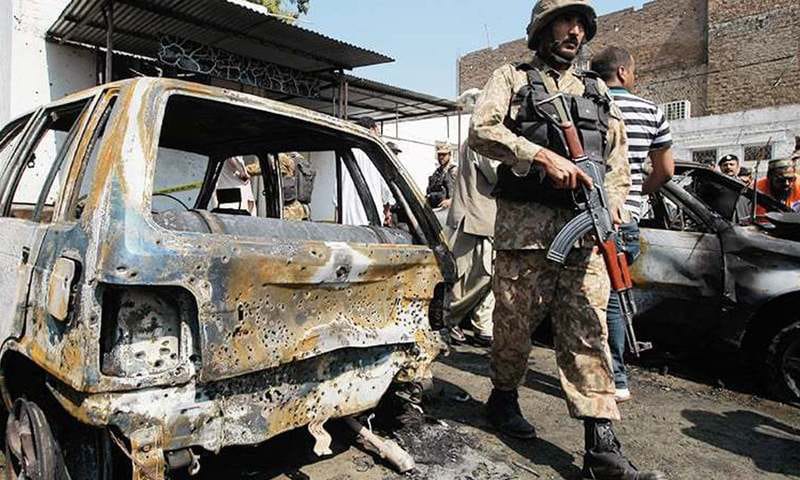
Meanwhile, in Ashgabat, the capital of Turkmenistan, Prime Minister Shehbaz Sharif said that a new threat of terrorism is emerging from Afghanistan, so the international community should put pressure on the Afghan government to fulfill its responsibilities. He warned that the international community needs to pay immediate attention to the threats of terrorism emerging from Afghanistan and persuade the Afghan authorities to fulfill their responsibilities. It may be recalled that Pakistan has informed the UN Security Council that terrorism emanating from Afghan soil is “the most serious threat” to Pakistan’s security. “A bigger and more serious threat than the current one.” During a discussion on the situation in Afghanistan in the Security Council, Pakistan’s Permanent Representative Asim Iftikhar Ahmed accused the Afghan Taliban of supporting terrorist groups and allowing them to operate freely across the border. Afghanistan has once again become a safe haven for terrorist groups and proxies, the devastating consequences of which are being suffered by its neighboring countries, especially Pakistan. Various groups, including ISIS-Khorasan, Al-Qaeda, TTP, ETIM, BLA, and Majeed Brigade, have safe havens on Afghan soil, where dozens of camps are facilitating cross-border attacks. According to him, the different groups are cooperating with each other in “joint training, illegal arms trade and coordinated attacks.” Referring to a regional country, Asim Iftikhar said, “An opportunistic and disruptive country is intensifying operations against Pakistan by providing financial, technical, and material support to terrorist groups.” His clear allusion was to neighboring India, with which the Taliban’s relations with Pakistan have improved in recent years. At least 70 people were killed on both sides in border clashes between Pakistan and Afghanistan in October. The two neighbors agreed to a ceasefire in Doha, which is still ongoing. However, clashes have also occurred during this period, and both sides have accused each other of violating the ceasefire. The Pakistani envoy said that Pakistan had held repeated talks with Taliban officials over the past four years, but “instead of taking effective action against terrorist groups, there has been a sharp increase in terrorist attacks on Pakistan from Afghan soil.” He added that this year alone, “nearly 1,200 Pakistanis have been killed as a result of terrorism crossing the border from Afghanistan, while 214 Afghan terrorists have been killed in operations in Pakistan since 2022.” He clarified that the border tensions are directly linked to terrorism and security, and Pakistan has called on the United Nations Assistance Mission in Afghanistan (UNAMA) to monitor the situation. The envoy warned that if the Taliban did not take “concrete and verifiable action” against the terrorist groups, Pakistan would take all necessary measures to defend itself. Prime Minister Shehbaz Sharif has said that Afghanistan has been made clear to choose between the outsiders and Pakistan.It should be remembered that Pakistan and Afghanistan are two neighboring countries with deep historical, religious, neighborhood, ethnic, and linguistic ties. The border of the two countries was open and peaceful for a long time. People used to come and go freely, do business and share joys and sorrows, but now things are completely different. It is clear that since Pakistan’s independence, Afghanistan has not shown the warmth in its behavior that is expected from a brotherly Islamic country. The policy of hesitancy in recognizing Pakistan and doubting its sovereignty has poisoned the relations between the two countries from the very beginning. Afghanistan has always played the role of a facilitator for the forces hostile to Pakistan. The result was that Pakistan’s peace was repeatedly sabotaged, terrorist groups were provided space, and they were supported for bloodshed inside Pakistan. Pakistan has shown patience and forbearance for a long time. Terrorism emanating from Afghanistan has once again revealed this fact. According to the Public Relations Department of the Pakistan Army, 35 Khawarij terrorists were killed in various operations in Khyber Pakhtunkhwa. This group was trying to disrupt peace in Pakistan with Indian patronage and a network of facilitators from Afghan soil. This is not the first time that Afghan soil has been used against Pakistan. Be it the previous government or the current Taliban administration, both have used various methods to nurture elements hostile to Pakistan. In light of intelligence reports, it has come to light that Afghan citizens are also involved in these terrorist acts. In this context, Prime Minister Shahbaz Sharif is absolutely right to say that Afghanistan will now have to decide whether it supports Pakistan or foreigners. This fact is not hidden from anyone that India has always been using Afghanistan as a proxy. Terrorist networks against Pakistan are provided with financial, military, and diplomatic support by India. It is a pity that Afghan soil is once again being made a battlefield to fulfill this agenda. The question is, how can the Taliban government deny this fact? This policy of “State of Denial” will ultimately harm Afghanistan itself. The Pakistani people and the state are united against terrorism.
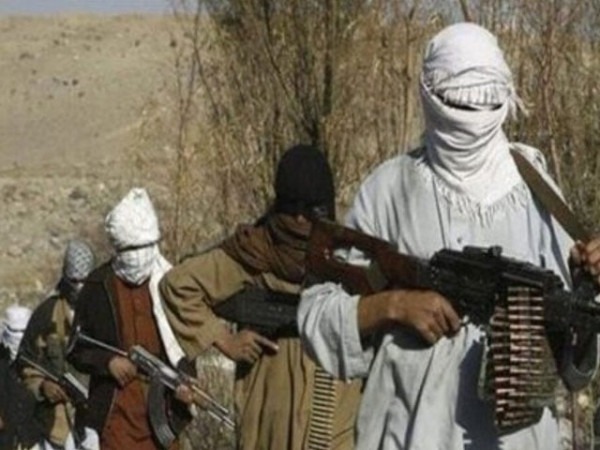 The government and institutions agree that terrorists and their facilitators will not be tolerated under any circumstances. It is true that if Afghanistan does not fulfill its responsibility, Pakistan will have no choice but to take tough measures. A war between the two countries is not in anyone’s interest, but Afghanistan must understand that tolerating or facilitating terrorism is, in a way, like shooting itself in the foot. It is also a sad fact that the Afghan Taliban government has maintained the same old approach as the Ashraf Ghani government, even after coming to power. Terrorists continue to enter from across the border; these groups are carrying out operations in Pakistan with modern American weapons, and the Kabul administration is just watching the spectacle. This behavior is not only harming Pakistan but also questioning Afghanistan’s own stability. Pakistan has repeatedly made proposals to the Afghan government to form a joint security mechanism, but when it receives only a refusal in response, then it is natural for patience to run out. We consider it necessary to say that instead of pushing the relations of the two countries into the quagmire of hostility, we should move forward with realism. Afghanistan must understand that Pakistan is its closest and natural ally. If it continues to be used by India, the loss will not only be for Pakistan but also for Afghanistan. The path of hostility is destructive for both. It is time for the Taliban government to show seriousness. If Afghanistan cannot prevent its soil from being used by terrorists, then a major tension in the region will become inevitable. Not only the two countries but the entire region will have to bear the consequences. Pakistan wants the Taliban government to take steps against the TPP, but the Afghan Taliban say that the TPP is an internal matter of Pakistan. Pakistan has also demanded that the Afghan Taliban issue a fatwa regarding the TTP. On the other hand, Pakistan alleges that Afghan citizens were involved in recent extremist incidents in the country, such as the attack on the Islamabad court, while the fabric of the attacks on the Cadet College in Bannu also resembles Afghanistan. Al-Qaeda, ISIS, and other terrorist organizations have centers in Afghanistan, which receive weapons and financial support from there and use them against Pakistan. The large amount of military equipment left there after the withdrawal of US forces from Afghanistan has become a major and worrying reason for the spread of terrorism in Pakistan. According to the report, military equipment worth about $ 7.1 billion was left in Afghanistan during the US withdrawal in 2021. This equipment included more than 427,000 light weapons, night vision devices, thermal devices, and other modern warfare equipment. It has been reported that this modern weaponry fell into the hands of the Taliban, which has now become the basis of their military power. The Taliban captured nearly one million pieces of military equipment in 2021, but Taliban representatives say at least half of that stockpile is now missing. Experts say the weapons have been sold, smuggled, or lost, significantly increasing security risks in the region.The weapons are compatible with the ground forces. Along with ground attacks, the threat of drones and armed quadcopters has also increased, while night vision and thermal devices have made terrorist operations more deadly. The Pakistan Army is putting up a strong frontline resistance against terrorism; however, the report also claims that the TTP has been receiving logistical and operational support from the de facto authorities in Kabul. The safe havens of militants in Afghanistan and the open availability of weapons remain a major security challenge for Pakistan. The report urges the international community to pay serious attention to the illegal proliferation of weapons and the growing threat of terrorism in Afghanistan. Effective tracking of weapons, action against illegal arms markets, and pressure on the Taliban have been declared indispensable for peace and stability in the region.


