





ISLAMABAD (Big Digit) Quaid’s Pakistan. URAAN Pakistan.

ISLAMABAD (Big Digit) The federal government has launched a project called ‘URAAN Pakistan’, in which high targets have been set for economic growth and exports as well as social sectors. Pakistani Prime Minister Shahbaz Sharif formally inaugurated this program on December 30, 2024, at a time when the government had made claims about stabilizing the country’s economy and reducing the pace of inflation. Under ‘URAAN Pakistan’, economic targets have been set for the next five and long-term periods up to 2035. For example, a target of six percent increase in the country’s growth rate in the next five years has been set, and a target of taking the size of the gross domestic product (GDP) to one trillion dollars by the next 10 years, i.e. 2035, has been set. It should be remembered that at present, Pakistan’s GDP is around $374 billion. Among the targets set by the government under this program, the first is to increase exports to $60 billion annually in the next five years. It should be noted that Pakistan’s current export volume is around $30 billion per year. Similarly, the GDP growth rate is to be taken to six percent in the next five years. The growth rate in the first quarter of the current fiscal year has been less than one percent. In the e-Pakistan sector, a target has been set to take the information technology freelance industry to $5 billion in the next five years, for which two hundred thousand IT graduates will be prepared annually.
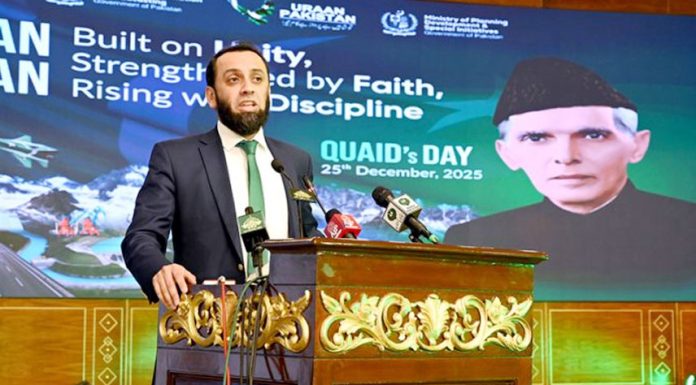
Federal Minister for Information and Broadcasting Attaullah Tarar says that the struggle and principledness of Quaid-e-Azam Muhammad Ali Jinnah is a beacon for the young generation. Quaid-e-Azam never compromised on principles in his life, he said this while addressing the “Quaid Ka Pakistan. URAAN Pakistan” ceremony. Federal Minister for Planning Ahsan Iqbal, Special Assistant to the Prime Minister Tariq Fatemi and others were also present on the occasion. The Federal Minister for Information said that such programs will make it very easy to understand the life, thoughts, vision and principles of the Quaid-e-Azam. Born in 1876 in the Minister’s Mansion, Karachi, the life of Muhammad Ali Jinnah is a beacon for the youth
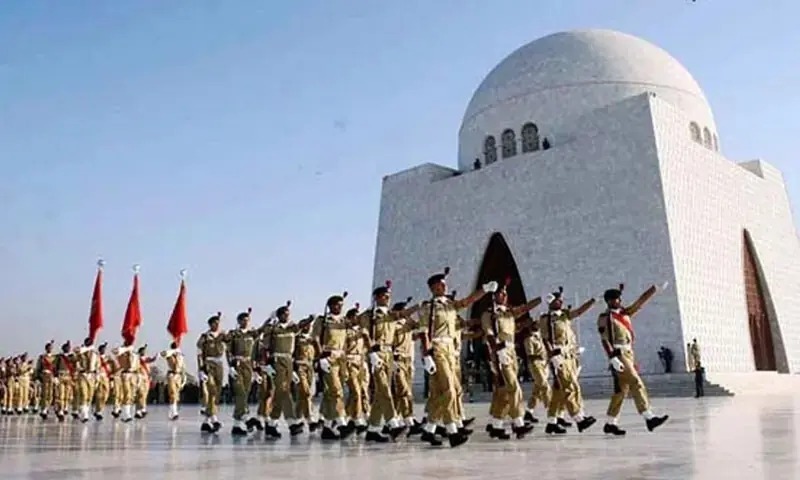
The three golden principles of Quaid-e-Azam, unity, organization and firm conviction, were the foundation of his success. In 1892, Quaid-e-Azam Muhammad Ali Jinnah went to London for an apprenticeship at the age of just 16 and during this time he decided to take up the field of law as a career. The Information Minister said that when a person adopts a goal with firm determination, Allah Almighty helps him. Quaid-e-Azam decided to go to Lincoln’s Inn to become a barrister. Historians write that he chose Lincoln’s Inn because the name of the Holy Prophet (peace and blessings of Allah be upon him) was listed as a lawgiver in the list of legislators inside the Lincoln’s Inn building. Quaid-e-Azam Muhammad Ali Jinnah became a barrister at the age of 19 and was awarded the honor of being the youngest barrister in the subcontinent. The life of Quaid-e-Azam Muhammad Ali Jinnah teaches us that the impossible can be made possible with determination, belief and continuous hard work. Quaid-e-Azam Muhammad Ali Jinnah made hard work and hard work his motto. The next stage of his life was to become a lawyer and As a politician, he had two basic pillars: principles and professional ability. The paths of Quaid-e-Azam Muhammad Ali Jinnah and Congress parted ways on the basis of principled differences. At that time, whatever Congress wanted to do was not acceptable to Quaid-e-Azam. He never compromised on his principles. The Federal Information Minister urged the youth to read Quaid-e-Azam’s 1908 Feroz Shah Mehta case, which was related to local government. In this case, Quaid-e-Azam not only won but also reinstated Feroz Shah Mehta in the Mumbai Corporation, after which Quaid-e-Azam had a series of cases. Quaid-e-Azam never abandoned the principle of the two-nation theory. Referring to the incident of a woman pulling her hijab in India, the Federal Information Minister said that this incident is proof of the extremism of the Hindutva theory. This is not just the desecration of a woman but the humiliation of women all over the world. The Hindutva theory is proving the two-nation theory of Quaid-e-Azam correct today. With each passing day, our belief in the two-nation theory is getting stronger and this theory is the foundation of the establishment of the two-nation theory. Pakistan was founded on this theory, and today we are breathing in free air. This two-nation theory will always be true. In 1940, during a conference held on All India Radio, Quaid-e-Azam Muhammad Ali Jinnah raised the slogan “Pakistan Zindabad” which gave new hope and more encouragement to the Muslims of the subcontinent for struggle. Quaid-e-Azam not only gave freedom to the Muslims but also left a mark in history that will remain forever. Pakistan is our identity and our pride. Today, the world recognizes Pakistan as an important and prestigious country and recognizes its soft power and defense capabilities. We should value this country. Pakistan was founded on the slogan “”لا الہ الا اللہ“ ” and whatever we have is due to this homeland.Quaid-e-Azam Muhammad Ali Jinnah was a great leader who fought an unparalleled struggle for the independence of Pakistan. December 25, 1876: Muhammad Ali Jinnah was born in Karachi. His father’s name was Jinnah Poonja and his mother’s name was Mithibai. 1887: At the age of eleven, he completed his primary education and entered Sindh Madrasatul Islam Karachi. Later, he also studied at the Christian Mission School. 1892: At the age of just 16, he left for England for higher education. He enrolled in Lincoln’s Inn in London and started studying law. He returned home in 1896 and started practicing law in Bombay. Very soon, he became a renowned lawyer with his ability and hard work. 1906: Joined the Congress. 1907: Elected a member of the Bombay Legislative Council and made a significant mark with his oratory. 1913: Joined the All India Muslim League and soon became one of the active leaders of the League. 1916: Played an important role in the Lucknow Pact. At that time, he was called the “ambassador of Hindu-Muslim unity”. 1919: After the Rowlatt Act and the Jallianwala Bagh tragedy, he had differences with the Congress. 1920: He disagreed strongly with Gandhi’s non-cooperation movement and separated from the Congress. 1930: Allama Iqbal’s Allahabad sermon presented the idea of a separate homeland for Muslims. After this, Muhammad Ali Jinnah struggled hard to organize the Muslim League. 1934: He returned permanently from Britain and took over the leadership of the Muslim League. 1937: Despite the limited success of the Muslim League in the elections, Quaid-e-Azam mobilized the Muslims and made them a separate political force. 23 March 1940: The Pakistan Resolution was passed in Minto Park (Iqbal Park) in Lahore. This was the culmination of Quaid-e-Azam’s leadership, the Muslim League demanded a separate state. 1945-46: The Muslim League won a landslide victory in the elections and emerged as the sole representative party of the Muslims of the subcontinent. 3 June 1947: The Partition Plan of India was presented, paving the way for the establishment of Pakistan. 14 August 1947: Pakistan came into existence and Quaid-e-Azam Muhammad Ali Jinnah became the country’s first Governor-General. On the same day, he delivered a historic address to the assembly in Karachi and explained the principles of the state. 11 September 1948: The Quaid-e-Azam died in Karachi after a long illness. Thus, a great leader became immortal in history by giving freedom to his nation. The armed forces expressed their determination to protect the sovereignty and territorial integrity of the country and play a full role in national stability, peace and development. Civil and military leaders highlighted their vision of a sovereign, democratic and inclusive state. The military leadership also paid tribute to Quaid-e-Azam. According to an ISPR statement, Chief of Defence Forces and Army Chief Field Marshal Asim Munir, Naval Chief Admiral Naveed Ashraf and Air Chief Marshal Zaheer Ahmed Babar Sidhu paid tribute to Quaid-e-Azam. The statement said that the armed forces reiterate their unwavering commitment to Quaid-e-Azam’s vision of a strong, sovereign, democratic and prosperous Pakistan based on the principles of faith, unity and discipline. Prime Minister Shehbaz Sharif said in his message that this day provides an opportunity to renew our commitment to the guiding principles of Quaid-e-Azam, democracy, supremacy of the constitution, social justice, religious harmony and equality and the vision of a welfare state based on the rule of law. He said that the eternal principles of faith, unity and discipline are the foundation of our national strength and a beacon of light for future generations. The Prime Minister said that Quaid-e-Azam was a visionary leader and a world-class statesman whose political insight, unwavering determination and selfless struggle changed the course of history and made it possible for the Muslims of the subcontinent to establish an independent homeland. He reiterated his resolve to carry forward the legacy of Quaid-e-Azam for the dignity, security, progress and prosperity of Pakistan. President Asif Ali Zardari, while emphasizing the enduring importance of Quaid-e-Azam’s leadership, appealed to the nation to renew its commitment to democratic and inclusive values. Quaid-e-Azam’s leadership, vision and principles guide the nation even in today’s challenges. According to him, the principles of democracy, justice and equality are at the heart of our national direction and should form the basis of institutions and decisions. The President termed unity, faith and discipline as indispensable for development, social harmony and national confidence and urged the youth to adopt the ideals of Quaid-e-Azam. Referring to the 150th birth anniversary of Quaid-e-Azam next year, he said that the government will declare 2026 as the year of Quaid-e-Azam so that his life, struggle and vision can be meaningfully reflected upon and his principles can be passed on to future generations.Quaid-e-Azam Muhammad Ali Jinnah was a great leader who fought an unparalleled struggle for the independence of Pakistan. December 25, 1876: Muhammad Ali Jinnah was born in Karachi. His father’s name was Jinnah Poonja and his mother’s name was Mithibai. 1887: At the age of eleven, he completed his primary education and entered Sindh Madrasatul Islam Karachi. Later, he also studied at the Christian Mission School. 1892: At the age of just 16, he left for England for higher education. He enrolled in Lincoln’s Inn in London and started studying law. He returned home in 1896 and started practicing law in Bombay. Very soon, he became a renowned lawyer with his ability and hard work. 1906: Joined the Congress. 1907: Elected a member of the Bombay Legislative Council and made a significant mark with his oratory. 1913: Joined the All India Muslim League and soon became one of the active leaders of the League. 1916: Played an important role in the Lucknow Pact. At that time, he was called the “ambassador of Hindu-Muslim unity”. 1919: After the Rowlatt Act and the Jallianwala Bagh tragedy, he had differences with the Congress. 1920: He disagreed strongly with Gandhi’s non-cooperation movement and separated from the Congress. 1930: Allama Iqbal’s Allahabad sermon presented the idea of a separate homeland for Muslims. After this, Muhammad Ali Jinnah struggled hard to organize the Muslim League. 1934: He returned permanently from Britain and took over the leadership of the Muslim League. 1937: Despite the limited success of the Muslim League in the elections, Quaid-e-Azam mobilized the Muslims and made them a separate political force. 23 March 1940: The Pakistan Resolution was passed in Minto Park (Iqbal Park) in Lahore. This was the culmination of Quaid-e-Azam’s leadership, the Muslim League demanded a separate state. 1945-46: The Muslim League won a landslide victory in the elections and emerged as the sole representative party of the Muslims of the subcontinent. 3 June 1947: The Partition Plan of India was presented, paving the way for the establishment of Pakistan. 14 August 1947: Pakistan came into existence and Quaid-e-Azam Muhammad Ali Jinnah became the country’s first Governor-General. On the same day, he delivered a historic address to the assembly in Karachi and explained the principles of the state. 11 September 1948: The Quaid-e-Azam died in Karachi after a long illness. Thus, a great leader became immortal in history by giving freedom to his nation. The armed forces expressed their determination to protect the sovereignty and territorial integrity of the country and play a full role in national stability, peace and development. Civil and military leaders highlighted their vision of a sovereign, democratic and inclusive state. The military leadership also paid tribute to Quaid-e-Azam. According to an ISPR statement, Chief of Defence Forces and Army Chief Field Marshal Asim Munir, Naval Chief Admiral Naveed Ashraf and Air Chief Marshal Zaheer Ahmed Babar Sidhu paid tribute to Quaid-e-Azam. The statement said that the armed forces reiterate their unwavering commitment to Quaid-e-Azam’s vision of a strong, sovereign, democratic and prosperous Pakistan based on the principles of faith, unity and discipline. Prime Minister Shehbaz Sharif said in his message that this day provides an opportunity to renew our commitment to the guiding principles of Quaid-e-Azam, democracy, supremacy of the constitution, social justice, religious harmony and equality and the vision of a welfare state based on the rule of law. He said that the eternal principles of faith, unity and discipline are the foundation of our national strength and a beacon of light for future generations. The Prime Minister said that Quaid-e-Azam was a visionary leader and a world-class statesman whose political insight, unwavering determination and selfless struggle changed the course of history and made it possible for the Muslims of the subcontinent to establish an independent homeland. He reiterated his resolve to carry forward the legacy of Quaid-e-Azam for the dignity, security, progress and prosperity of Pakistan. President Asif Ali Zardari, while emphasizing the enduring importance of Quaid-e-Azam’s leadership, appealed to the nation to renew its commitment to democratic and inclusive values. Quaid-e-Azam’s leadership, vision and principles guide the nation even in today’s challenges. According to him, the principles of democracy, justice and equality are at the heart of our national direction and should form the basis of institutions and decisions. The President termed unity, faith and discipline as indispensable for development, social harmony and national confidence and urged the youth to adopt the ideals of Quaid-e-Azam. Referring to the 150th birth anniversary of Quaid-e-Azam next year, he said that the government will declare 2026 as the year of Quaid-e-Azam so that his life, struggle and vision can be meaningfully reflected upon and his principles can be passed on to future generations.Pakistan The day began with a 31-gun salute in Islamabad and a 21-gun salute in provincial capitals. After Fajr, special prayers were offered in mosques for the peace, prosperity and development of Quaid-e-Azam, the country. A change of guards ceremony was also held at the Quaid-e-Azam’s shrine in Karachi. In his last message to the nation on August 14, 1948, Quaid-e-Azam had said that the foundations of your state have been laid. Now it is your duty to build it and build it as soon as possible. Pakistan was established in a world of chaos and chaos and in dire circumstances. There is no doubt that hardly any other nation in the world has started its journey of life with such limited resources and in such dire circumstances. This newborn nation had neither inherited a central government nor a capital, nor did it have any administrative institutions, nor an organized defense force. Its social and administrative resources were also very meager. Essential equipment was missing. The horrific game of fire and blood, death and destruction played by the Sikh Front against the partition of India in Punjab had reduced a vast area of Punjab to a desolate ruin. The communication system had been disrupted. In addition, the complete displacement of Hindu and Sikh traders and administrative staff had almost devastated the economy. The treasury was empty because India had refused to give Pakistan its share of the foreign exchange reserves to which it was entitled. On top of all this, the newborn nation was also burdened with the maintenance of eight lakh migrants who had migrated to Pakistan from the plains of North India during that long and extremely hot season due to the brutality, barbarity and insecurity. If all these problems had revealed the administrative and economic weaknesses of Pakistan, then the military defeat of the Junagadh state in November 1947, which had basically decided to join Pakistan, and the war over the issue of Kashmir between October 1947 and December 1948, had also revealed the military weaknesses of this newborn state that it had inherited. Even in all these circumstances, Pakistan’s survival was nothing less than a miracle and this miracle was the result of the charismatic hand of a single individual and that person was Quaid-e-Azam Muhammad Ali Jinnah. At this very critical stage of history, Pakistan needed a charismatic leader like him. And this person fulfilled this need very well and beautifully. The fact is that only Quaid-e-Azam could have done this miraculous work because, according to the London Times, “to these people, to the nation that had come this far under his guidance, he was more than Quaid-e-Azam, more than the head of state, and to the Islamic state that he himself had founded, he was a little more than the architect.” If all the circumstances and events were analyzed honestly, the conclusion would be that this newborn nation survived such a devastating and horrific crisis after its turbulent birth only because Quaid-e-Azam was the overseer of the affairs of the state during that period. The immense trust that the people of Pakistan had in him, the great devotion and love that the people had for him in their hearts, Quaid-e-Azam used it to give this nation the courage to deal with the difficulties and sufferings it faced, and gave it the determination to confront these disasters, devastations and horrors with new energy. Independence diverted the warmth and energy of the patriotic feelings that had been kindled in his heart towards constructive activities. This was undoubtedly a period when Quaid-e-Azam was very tired. His strength had waned. His health had given way, indeed his existence had become like a walking shadow of the past. Despite this illness, this weakness and this severe exhaustion, he carried most of the heavy burden of responsibilities on his shoulders in the first very important and delicate year of the life of this new country and new state. He formulated the policies of the new state, clearly identified the problems facing the nation and worked tirelessly to solve them. He not only informed the Constituent Assembly, the civil servants and the armed forces of their duties but also told them what the nation expected of them.
Despite the fact that the riots in northern India were particularly troublesome, Quaid-e-Azam adopted effective methods to maintain order and stabilize peace and order at all costs. In October 1947, he moved to Lahore for a while to closely examine the situation arising from the continuous and massive flood of refugees. He could plan for the accommodation and food of these helpless people, for their settlement, to develop a strategy for making them an integral part of the new nation. And above all, he could intensify the passion and feeling of belonging to the new homeland among these defeated, homeless and destitute people. This was a period when emotions were extremely agitated throughout the Indian subcontinent, but he never lost his sense of reason and balance. Despite all the provocations, he always acted with seriousness, patience, composure and steadfastness. In the face of these provocations, he kept the people of Lahore from taking revenge. He advised them to be patient and restrained.And while informing them of the responsibilities of protecting minorities, he drew their full attention and enthusiasm towards the settlement of refugees. He guaranteed protection to the minorities in a clear and definite manner. He created a sense of trust and security in them. He consoled them, consoled them. He worked with a messianic spirit to heal their wounded emotions and feelings. At the same time, Quaid-e-Azam visited different provinces, paid attention to their problems. He gave the people of these provinces a new hope. He intensified the feelings of attachment to Pakistan and informed them of new responsibilities. He ended the British Forward Policy in the Frontier Province and by withdrawing troops from the Waziristan Agency, he made the Pashtuns realize that they were also an integral part of the body politic of Pakistan. He established a new ministry of states and frontier areas and also accepted the responsibility of starting a new era in Balochistan. He resolved the controversial issue of the status of Karachi. He ensured the integration of the states into Pakistan. In particular, he ensured the integration of the state of Kalat, which seemed to be a very complicated issue in the circumstances of that time. In addition, he continued difficult negotiations with Mountbatten to resolve the Kashmir issue and was constantly in correspondence with the Commonwealth Office of the British government. His entire effort was to force the Commonwealth Office to stop the communal riots in East Punjab and to take measures to reduce the tension between the two states so that peace and stability could be established in the Indian subcontinent.
He corresponded with the governors of various provinces, continued to meet ministers and politicians. He was deeply aware of the situation in various provinces and wherever he considered it necessary, he also advised the concerned persons to pay attention to all the details and responsibilities of their positions. Not to mention the cabinet meetings. He also presided over the meetings of the Quaid-e-Azam Relief Fund Committee for the settlement of refugees for hours. Despite the fact that the deadly disease had licked all his energies. He reached Karachi from Quetta after a painful journey to inaugurate the State Bank of Pakistan because the State Bank of Pakistan was a symbol of Pakistan’s financial independence. And besides all this, he continued to guide, show new paths and encourage the group of active people he had gathered around him to deal with the various and complex problems of that era and to establish an effective system and institution of administration, to reorganize the armed forces and to lay solid foundations of a progressive and welfare state. Expressing complete satisfaction over the completion of his mission, Quaid-e-Azam (RA) had said in a message to the nation on 14 August 1948, “The foundations of your state have been laid. Now it is your duty to build it and build it as soon as possible.” The opinions of eminent people of the world are in front of us about the personality of Quaid-e-Azam.
Dr. Dilawar Hussain of Quaid-e-Azam University, Islamabad, says that the forum chosen by Muhammad Ali Jinnah in the creation of Pakistan was the Legislative Assembly. “He started parliamentary politics from there and from there he talked about Muslims and rights and later he also did party politics. Dr. Dilawar, an associate member of the University of Hull in the UK, has also written a book on the Senate of Pakistan. His expertise is in parliament, governance and policy issues. Quaid-e-Azam was first made a member of the Imperial Legislative Council in 1910. His parliamentary career played a very important role in the formation of Pakistan. Muhammad Ali Jinnah became a member of the Imperial Legislative Council in his youth, i.e. in his 30s. In order to make Pakistan a moderate country, Quaid-e-Azam Muhammad Ali Jinnah’s address to the Legislative Assembly on August 11, 1947 and his 14 points are of great importance for policymakers. He not only highlighted the rights of minorities but also clearly stated that all people in Pakistan would get equal rights regardless of color, race, religion. L.F. Push William held various positions in undivided India and his book State of Pakistan is apt to say. Friends are adamant that when Britain was in trouble, it supported the Muslim League against the Congress by following the policy of “divide and rule”, in which Mr. Jinnah became its tool. The argument against this theory is that anyone who knows Mr. Jinnah is well aware that “he never became anyone’s tool in life,” he goes on to say. “Keeping in mind the cunning of the Congress, the Quaid-e-Azam handled all matters with such wisdom and skill that even the Congress leaders began to consider the establishment of Pakistan and the partition of India as a hope of avoiding a major disaster.”Field Marshal Sir Clyde Architect says, “I am a great admirer of Jinnah. He was a great personality. And he was a man of great talent. Nothing could dampen his extraordinary willpower.”
The renowned intellectual and author of Jinnah of Pakistan, Stella Walpert, says, Jinnah was undoubtedly a brilliant man and he was the greatest legal mind of the subcontinent. Although Nehru was also a lawyer, he, unlike Jinnah, had little understanding of legal nuances.
Lord Mountbatten: “Jinnah’s personality was very prominent and distinguished. He was as firm as a rock and a man of very cold heart and mind. If he had to compromise, he did it in a manly way, not in a cowardly way.”
Lord Jordan: Mr. Jinnah is very strict in his views and opinions. There is no flexibility in his attitude. He is not only a sincere leader of the Muslim nation but also a true lawyer.
Sir Winston Churchill: Jinnah is an excellent politician. He is an intelligent and intelligent leader of Muslims, I can never forget this leader of Muslims in my heart for the rest of my life.
Gopal Krishna Gokhle: Jinnah is full of the essence of truth. He is free from sectarianism. Whenever India gets freedom, it is because of Jinnah. A time will come when he will become the messenger of Hindu-Muslim unity. Because he has countless talents.
Jawaharlal Nehru: The most valuable asset of a person is that he should have a high character and a good life. Mr. Jinnah’s personality was an example of high character. Through which he conquered every battle of life.
Mrs. Sarojini Naidu: A lucky man who suddenly fell victim to an unexpected situation has come out to subjugate the world on the basis of his courage and determination. Whatever opinion is formed about Mr. Jinnah, I can say with full confidence that Mr. Jinnah could be bought at any price.
Master Tara Singh: Quaid-e-Azam saved Muslims from the slavery of Hindus. If this person had been born among the Sikhs, he would have been worshipped.
Mrs. Lakshmi Pandit: If there had been a Soganidhi in the Muslim League and a Jinnah in the Congress, the country would not have been divided.
Mussolini: It would not be wrong to say about Quaid-e-Azam that he is a history-making personality who is born somewhere after centuries.
Mahatma Gandhi: Quaid-e-Azam undoubtedly possessed high qualities. He was at the heights of character and character. Where no greed, fear or anger could divert him from his path. He was a mountain of determination and steadfastness. Neither empire nor wealth could hinder him, nor could the glory of the government attract him. He had immense control over the Muslim people. I respect Jinnah’s single-mindedness, high ability and stable character. Of course, no one can buy him. The fact is that he was a melting pot of determination, honesty and trustworthiness, selflessness. The lava of hot and eagerness was always boiling in his personality. There was no one else who possessed his intelligence, wisdom and ability. Quaid-e-Azam, fulfilling the responsibilities he had taken upon himself with the establishment of Pakistan, finally fell into the deep sleep of death.

