ISLAMABAD (Big Digit) From an Ancient Water Town to the Digital World



By Mr. Shahid Afraz Khan, International Relations Expert and Producer at China Media Group (CMG), Beijing
ISLAMABAD (Big Digit) Among China’s ancient towns is one where centuries-old history and modern technology appear to be seamlessly intertwined. Located along waterways, the thousand-year-old town of Wuzhen is known around the world not only for its historical charm and traditional culture, but also as an important center for global internet cooperation. Every year, people from different parts of the world associated with the internet, artificial intelligence, the digital economy and cyberspace gather here to discuss the future of technologies that are increasingly influencing almost every aspect of human life.
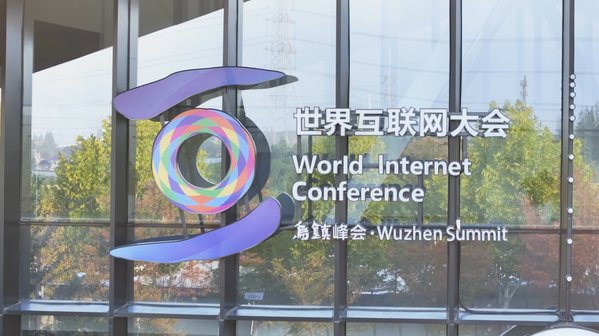
Wuzhen’s present-day identity did not emerge overnight. Under the guidance of President Xi Jinping, efforts to preserve the ancient town, improve its aquatic environment, restore historic buildings and present traditional culture in new ways have transformed it into a place where the past and the future can be seen together. Later, the selection of Wuzhen as the permanent venue of the World Internet Conference became a symbol of the idea that modern technology and human civilization are not contradictory, but can instead complement and advance one another. In this way, a thousand-year-old town established a connection with a new era of global digital cooperation.
The 2026 World Internet Conference Wuzhen Summit appeared to carry this vision forward. Around 1,800 delegates from approximately 138 countries and regions attended the conference, which was held under the theme, “Openness and Sharing, Joint Contribution and Shared Benefits, Building a Community with a Shared Future in Cyberspace.” The conference emphasized making the development of artificial intelligence more open, inclusive and collaborative, as the internet is no longer merely a means of exchanging information but has become a fundamental driver of transformation in artificial intelligence, the economy, education, healthcare, industry and everyday life.
As the leader of a major and responsible country, President Xi Jinping has viewed the development of the internet not simply as a matter of technological progress, but within the broader context of human development and global cooperation. In 2015, at the opening ceremony of the Second World Internet Conference, he put forward the concept of building a community with a shared future in cyberspace, which received broad recognition and appreciation from the international community. According to this global vision, the internet should be used as a new driving force for development, a new frontier for safeguarding security, and a new platform for mutual learning and benefit among civilizations.
In President Xi Jinping’s view, the purpose of internet development is not merely to make technology faster and more advanced, but also to ensure that its benefits reach as many countries and people as possible. He has consistently emphasized giving priority to development, building a more inclusive and prosperous cyberspace, putting scientific and technological achievements into practical use, and improving people’s quality of life. At the same time, he has highlighted the need for a peaceful and secure cyberspace in which cyber sovereignty and international law are respected, while cyber hegemony, bloc confrontation and an arms race in cyberspace are avoided.
This vision also appeared to be closely aligned with the theme of the 2026 Wuzhen Summit, where emphasis was placed on open-source technology, joint innovation and broader participation in the benefits of digital development. China has also emphasized the creation of an open, inclusive and dynamic global digital environment through open innovation, technology transfer and the sharing of knowledge.
China’s internet development story is itself an important part of this broader transformation. Over more than three decades, China’s internet has developed from a limited beginning into the foundation of one of the world’s largest and most advanced digital societies. More than one billion internet users, an extensive fiber-optic network, one of the world’s largest 5G networks and rapidly developing artificial intelligence are clear examples of this transformation. The internet is no longer limited to urban areas; in rural regions as well, it is creating new opportunities in education, commerce, medical services, employment and entrepreneurship.
The development of the internet in China has not only improved means of communication but has also transformed the way the economy operates. Online shopping, online travel services, digital payments, online education, healthcare services, livestreaming and online employment have become part of people’s everyday lives. In the industrial sector, the use of the industrial internet, big data, cloud computing and artificial intelligence has brought new changes to production and management methods, while in rural areas, digital technologies have opened new channels for bringing local products to wider markets.
The next stage of this development is closely linked to artificial intelligence. Large AI models, advanced computing, next-generation networks and other emerging technologies are further expanding the capabilities of the internet. However, the rapid development of artificial intelligence has also made it increasingly important to consider how the benefits of these technologies can reach all countries and societies, and how security, transparency and responsibility can be ensured in their use.
Perhaps the true strength of the internet lies in its ability to reduce distances. Technology developed in one country can benefit a farmer, student, doctor, businessperson or ordinary citizen in another. Similarly, experiences and ideas from different societies can reach one another. At the same time, this creates a greater responsibility to ensure that cyberspace remains secure, peaceful, inclusive and accessible to all.
Today, perhaps the greatest beauty of Wuzhen lies precisely in this coexistence. On one side are ancient bridges, traditional buildings, waterways and centuries-old culture, while in the same environment people discuss some of the world’s most advanced technologies, artificial intelligence and the future of the digital age.
This scene is, in many ways, also a symbol of the journey of the internet itself. The past can preserve its identity while connecting with the future, provided that people, society and the common interest remain at the center of development. The ancient town of Wuzhen has become a beautiful example of this philosophy, linking its thousand-year-old history with the digital age and conveying a powerful message: the best future for technology is one that brings people closer together, expands opportunities and paves the way for shared development.